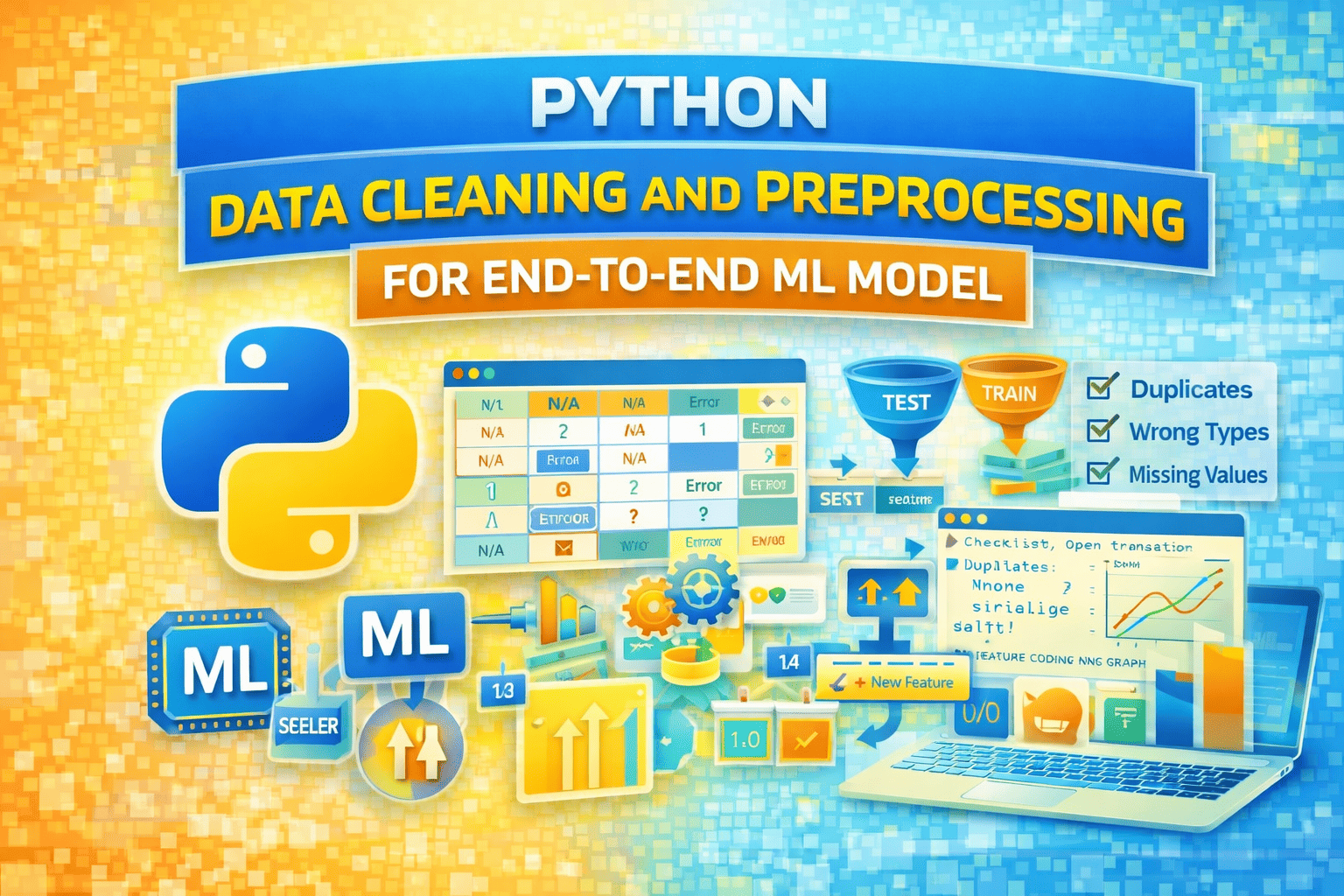
Python Data Cleaning and Preprocessing for End-to-End ML Model

By Progya Categories: ChatGPT, Python
Share
Share Course
Page Link
Share On Social Media

About Course

Learn how to clean, transform, and prepare data in Python using real-world techniques that are essential for data analysis, machine learning, and predictive modeling.

This course is designed to help you move beyond basic Python programming and start working with real datasets the way professional data analysts and data scientists do. You will learn how to load datasets into Python, identify and handle missing values, remove duplicates, fix inconsistent data, correct data types, and prepare data for analysis.

In addition, you will learn important data manipulation and feature engineering techniques such as sorting, filtering, merging datasets, creating new variables, encoding categorical data, normalizing features, and splitting data into training and testing datasets.

By the end of this course, you will be able to confidently take raw, messy data and transform it into a clean, structured, and machine learning-ready dataset, making you job-ready for roles such as data analyst, data scientist, machine learning analyst, and business analyst.

Show More

What Will You Learn?

  • Load datasets into Python and understand how data is stored, structured, and manipulated inside the Python environment
  • Identify missing values in datasets and understand how missing information can affect analysis and machine learning results
  • Use SimpleImputer and Scikit-learn techniques to fill missing values in a structured and professional way instead of deleting useful data unnecessarily
  • Detect inconsistent values and clean messy data so your datasets become accurate, reliable, and analysis-ready
  • Correct miss-identified data types, ensuring that numeric, text, and date columns are treated properly for calculations and modeling
  • Remove duplicated records from datasets, helping you avoid misleading analysis and repeated information
  • Sort and arrange datasets in meaningful ways so you can quickly identify patterns, trends, and unusual values
  • Filter data using conditions to focus only on relevant observations and answer specific business questions
  • Merge multiple datasets together using common variables, allowing you to combine information from different sources into one dataset
  • Concatenate dataframes to add supplementary records and expand your datasets without losing structure
  • Create entirely new variables through feature engineering, allowing you to uncover deeper insights from existing data
  • Extract useful information such as day, month, and year from date variables for time-based analysis
  • Convert categorical text values into numeric values so they can be used in machine learning models
  • Create dummy variables for nominal categories, which is a critical skill for preparing data for predictive analytics
  • Normalize and standardize variables using StandardScaler so features remain balanced and comparable during modeling
  • Split datasets into training and testing sets correctly, helping you build more reliable and realistic machine learning models
  • Understand the exact sequence professionals follow before building machine learning models, instead of jumping directly into algorithms

Course Content

Data Cleaning for Error-free ML Model

  • Load your dataset into Python environment
    07:06

Earn a certificate of your expertise!

Add this certificate to your resume to demonstrate your skills & increase your chances of getting noticed.
selected template
Scroll to Top